Risk-on sentiment returns to Wall Street as the “TACO” effect triggers a massive rebalancing in energy and safe-haven assets.
Could the 2026 Iran War be reaching a definitive turning point, or is this merely a tactical pause in a larger conflict? On Wednesday, April 22, 2026, President Donald Trump announced an indefinite extension of the ceasefire with Iran, narrowly avoiding a deadline that many feared would lead to a total naval blockade of the Strait of Hormuz. This sudden shift toward diplomacy has immediately deflated the “war premium” that has kept energy prices at historic highs for months. As the news hit the terminals, commodity markets witnessed a massive rotation, with Brent crude tumbling below $95 and safe-haven gold retreating from its record peaks as traders pivot back toward a risk-on environment.
What Happened: The Islamabad Diplomacy and the Indefinite Truce
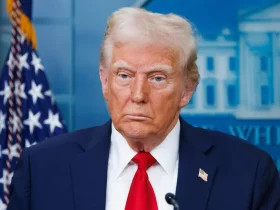
The announcement came directly from the White House less than 24 hours before a two-week truce was set to expire. For weeks, the market had been bracing for a binary outcome: total escalation or a “TACO” (Trump Always Chickens Out) moment. President Trump appears to have chosen the latter, signaling that ongoing logistical preparations for peace talks in Islamabad, Pakistan, are showing enough promise to warrant an “indefinite” pause in hostilities. This marks a significant departure from the bellicose rhetoric of early April, when the administration threatened to “decimate” Iranian infrastructure if the Strait of Hormuz was not fully cleared of tolls and naval mines.
Critically, the ceasefire extension addresses the $1.00-per-barrel “cryptocurrency toll” previously demanded by Iranian authorities for outbound tankers. While independent maritime analysts at Windward note that traffic remains cautious, the White House has demanded an immediate “normalization” of the channel. The geopolitical risk premium, which added an estimated $15–$25 to every barrel of oil since the war began in March, is now being aggressively priced out by institutional desks.
Market Impact Analysis: Commodities and Indices in Flux
The commodity complex has seen its most volatile 24 hours of the year. Energy-heavy portfolios are being liquidated in favor of growth-sensitive equities, as the threat of global stagflation appears—at least temporarily—to have receded.
- Oil Markets: Brent Crude plunged 13.3% to settle at $94.75, down from its war-peak of $119. WTI followed suit, trading near $94.41. Refineries that were lacking specific crude grades due to the blockade are now pricing in a return to supply normalcy.
- Precious Metals: Spot Gold (XAU/USD) retreated from its highs, currently trading at $4,651.34 per ounce. The move away from safe havens has dampened the immediate “flight to quality,” though silver and platinum remain volatile as industrial demand expectations rise.
- Equity Indices: The S&P 500 jumped 2.5% (approx. +165.96 points) and the NASDAQ 100 surged 2.8% on the news. Lower energy costs are being viewed as a “tax cut” for consumers and a relief for tech companies facing high operational costs.
- Currencies: The US Dollar Index (DXY) weakened slightly as defensive flows exited the greenback, supporting a modest rally in emerging market currencies that were battered by the energy shock.
Technical Analysis: Key Levels to Watch
For oil traders, the $90.00 level on Brent is the “line in the sand.” A break below this psychological support would signal a return to the pre-war trading range. On the upside, $100.00 now serves as a formidable resistance zone. For Gold, the 50-day moving average near $4,580 is the primary target for bears, while bulls need a re-escalation of rhetoric to push prices back toward the $5,000 milestone analysts have predicted for late 2026.
Trading Implications & Strategy
Day Traders: High-frequency opportunities are currently found in the “mean reversion” of energy stocks. Watch companies like ExxonMobil and Chevron, which are trailing the oil price drop but may find support from the broader stock market rally. Swing Traders: This is a “sell the rumor, buy the news” event for commodities. The risk now is a “bull trap” in equities if the ceasefire proves to be as precarious as analysts at MUFG suggest.
Long-term Investors: The focus should shift toward the inflationary outlook. If the ceasefire leads to a permanent reopening of Hormuz, the Federal Reserve—and its likely new Chair, Kevin Warsh—may find a clearer path toward rate cuts in late 2026, as gasoline-driven inflation pressures ease from their March highs of $4.00 per gallon.
KEY TAKEAWAYS:
- Ceasefire Extension: President Trump’s “indefinite” extension removes the immediate threat of a military confrontation in the Strait of Hormuz.
- Energy Repricing: Brent Crude has lost over 13% of its value in 24 hours, returning to the sub-$95 range as supply disruption fears fade.
- Safe-Haven Exit: Gold prices have muted their rally, retreating to $4,651 as investors rotate back into growth-focused equities.
- Inflation Relief: US gasoline prices, which hit $4.00/gallon in March, are expected to stabilize, providing a potential window for Dovish Fed pivots.
- Contrarian View: The ceasefire remains “precarious.” Maritime data shows tanker traffic has NOT yet normalized, suggesting the market may be over-optimistic about a full supply recovery.
WHAT’S NEXT: CATALYST WATCH
- Thursday, April 23: Israel-Lebanon peace negotiations in Washington. Progress here often correlates with U.S.-Iran sentiment.
- Islamabad Summit: Watch for the official confirmation of a meeting between VP JD Vance and Iranian Speaker Mohammad Ghalibaf.
- Weekly EIA Data: First report to show if Hormuz “tolls” are actually being cleared and if crude stockpiles are recovering.